Rolling papers are the cheapest thing in the shop and the one people ask the most questions about. Two variables matter: size and material. Once you know those, the wall of options gets a lot smaller.
Sizes
Sizing is a holdover from decades of convention rather than a tidy metric system, which is why the names sound arbitrary.
Single wide — roughly 68–70mm long, 34–36mm wide. The original size. Small, quick, one person.
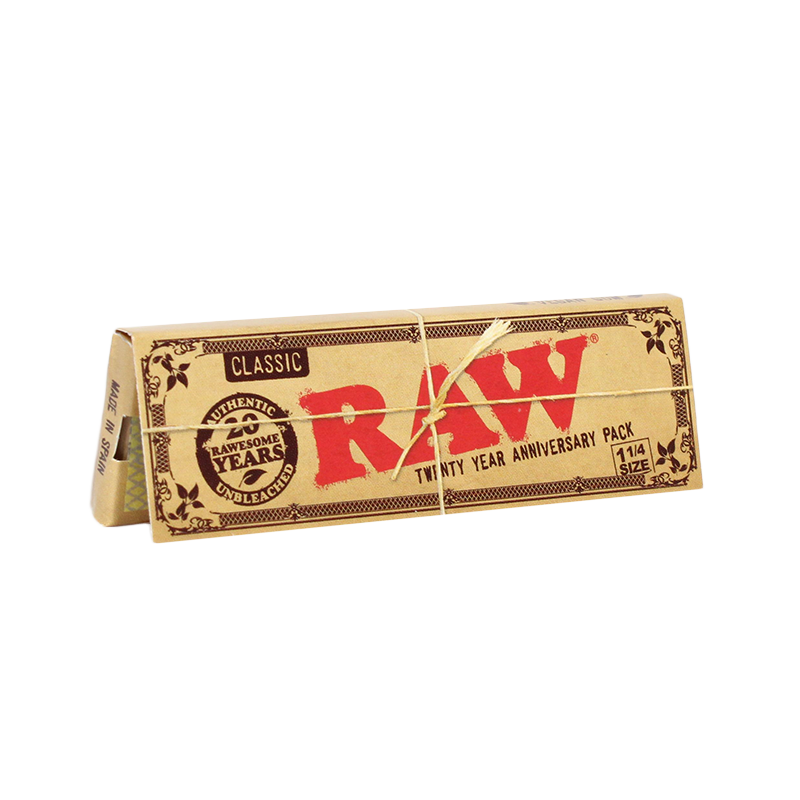
1¼ — about 76–78mm long and slightly wider. Also called Spanish size. The most popular size sold, and the middle ground most people default to.
1½ — same length as 1¼ but wider. Useful if you find 1¼ tight but don’t want a king.
King size — around 100mm. Noticeably bigger, meant for sharing.
King size slim — 108mm long but narrow. Long and thin rather than long and fat, which is why it burns slower than a standard king.
If you’re not sure, start at 1¼. It’s the size most people land on anyway.
Materials
This is where the real difference in burn quality lives.
Unbleached / natural
RAW Classic is the reference. The light brown color is the point — the paper hasn’t been chlorine-bleached white. Slightly thicker than rice paper, more forgiving to roll, and a bit slower to burn.
Rice
Elements is the best-known. Very thin, burns slowly and cleanly, and leaves minimal ash. The trade-off is that thin papers are harder to handle if you’re new to it or your hands are cold.
Hemp
A middle ground — a bit more grip than rice, a slower burn than wood pulp, and an unbleached finish. RAW Organic Hemp sits here.
Wood pulp
The classic white paper, usually bleached. Easiest to roll, fastest to burn, and the least expensive. Zig-Zag’s white papers are the archetype.
Cones, if you’d rather not roll
Pre-rolled cones come with the tip already in place — you fill and pack. They cost more per unit than papers but remove the skill element entirely. Sold in 6-packs, 3-packs for kings, and bulk boxes of 32 and up.
Tips and filters
A tip does three things: keeps the end from collapsing, stops material pulling through, and gives you something to hold. Some packs include them — RAW’s Connoisseur line pairs papers and tips in one booklet — and otherwise they’re sold separately for a couple of dollars.
Storage
Keep papers somewhere dry and flat. Humidity is what ruins the natural gum line, and a booklet that’s been rattling loose in a pocket for a month will not seal properly. A tray or a case is worth the few dollars.


Rolling paper sizes and materials, decoded
Rolling papers are the cheapest thing in the shop and the one people ask the most questions about. Two variables matter: size and material. Once you know those, the wall of options gets a lot smaller.
Sizes
Sizing is a holdover from decades of convention rather than a tidy metric system, which is why the names sound arbitrary.
If you’re not sure, start at 1¼. It’s the size most people land on anyway.
Materials
This is where the real difference in burn quality lives.
Unbleached / natural
RAW Classic is the reference. The light brown color is the point — the paper hasn’t been chlorine-bleached white. Slightly thicker than rice paper, more forgiving to roll, and a bit slower to burn.
Rice
Elements is the best-known. Very thin, burns slowly and cleanly, and leaves minimal ash. The trade-off is that thin papers are harder to handle if you’re new to it or your hands are cold.
Hemp
A middle ground — a bit more grip than rice, a slower burn than wood pulp, and an unbleached finish. RAW Organic Hemp sits here.
Wood pulp
The classic white paper, usually bleached. Easiest to roll, fastest to burn, and the least expensive. Zig-Zag’s white papers are the archetype.
Cones, if you’d rather not roll
Pre-rolled cones come with the tip already in place — you fill and pack. They cost more per unit than papers but remove the skill element entirely. Sold in 6-packs, 3-packs for kings, and bulk boxes of 32 and up.
Tips and filters
A tip does three things: keeps the end from collapsing, stops material pulling through, and gives you something to hold. Some packs include them — RAW’s Connoisseur line pairs papers and tips in one booklet — and otherwise they’re sold separately for a couple of dollars.
Storage
Keep papers somewhere dry and flat. Humidity is what ruins the natural gum line, and a booklet that’s been rattling loose in a pocket for a month will not seal properly. A tray or a case is worth the few dollars.